
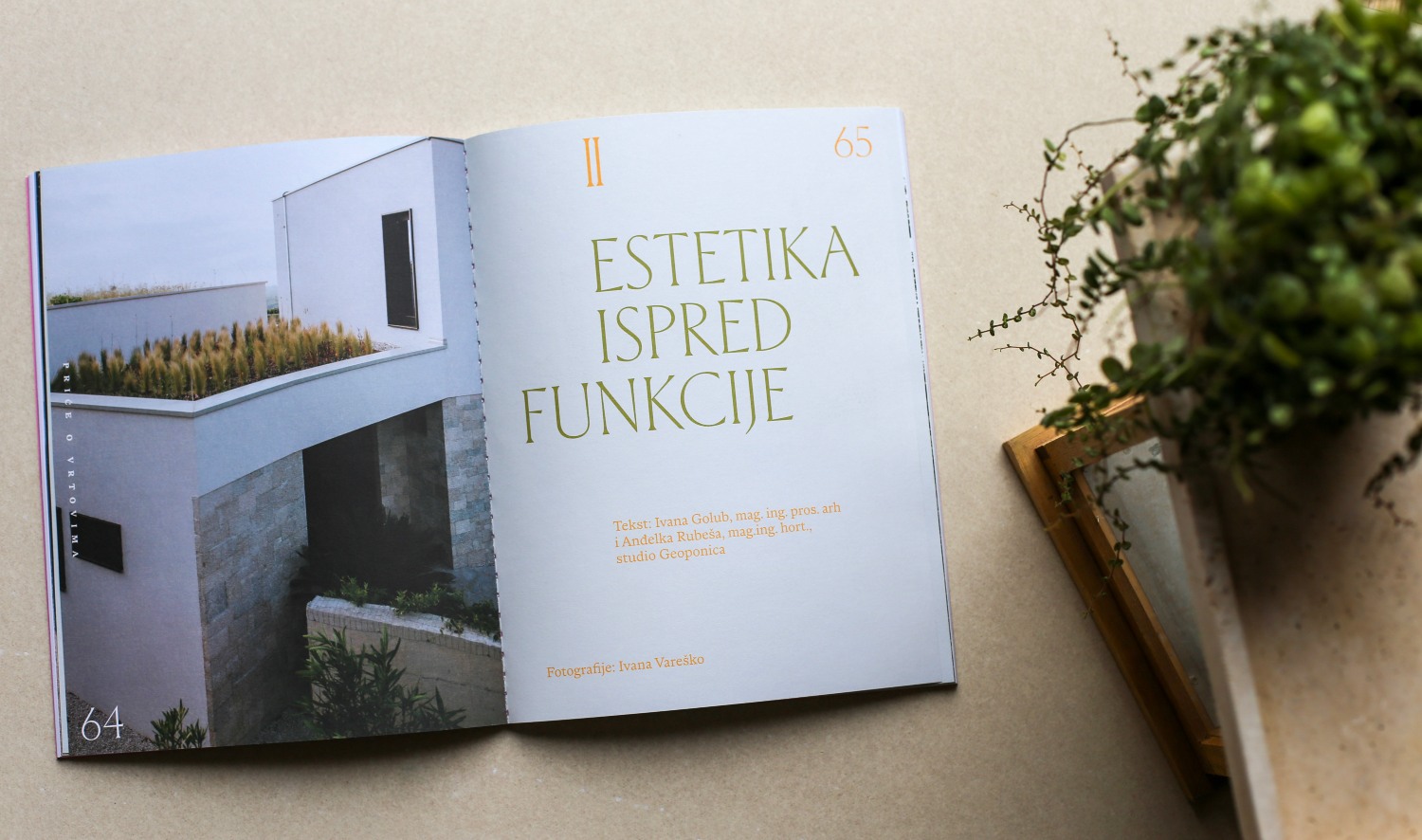
Villa Alma Garden in Istria – a landscape project by Studio Geoponica published in Vert magazine
The Villa Alma garden project was presented in the fourth issue of Magazine Vert, one of the few regional media specialized in living in green, with the idea of being an incentive to create a more sustainable model of everyday life where aesthetics are easily combined with functionality. With the publication in Vertu the landscape project of Villa Alma received additional professional confirmation and visibility within the professional community.
Location and context of Villa Alma
Villa Alma is located in the famous wine-growing region near Vižinada, surrounded by Malvasia and Teran vineyards. The location is at an altitude of between 200 and 300 meters, which ensures a pleasant sub-Mediterranean climate with milder summer temperatures and cooler nights.
The red Istrian soil, open landscapes and agricultural character of the area set a clear framework for designing a garden that respects the environment, but at the same time suits a modern lifestyle.

The concept of the garden and its relationship with architecture
The villa's architecture, with its large glass walls, allows for a constant visual connection between the interior and exterior. The garden is conceived as an extension of the interior space, rather than as a decorative backdrop.
The exterior is divided into several zones that are defined more aesthetically than strictly functionally, with an emphasis on the experience of space, rhythm of movement and views.

Access and spatial organization
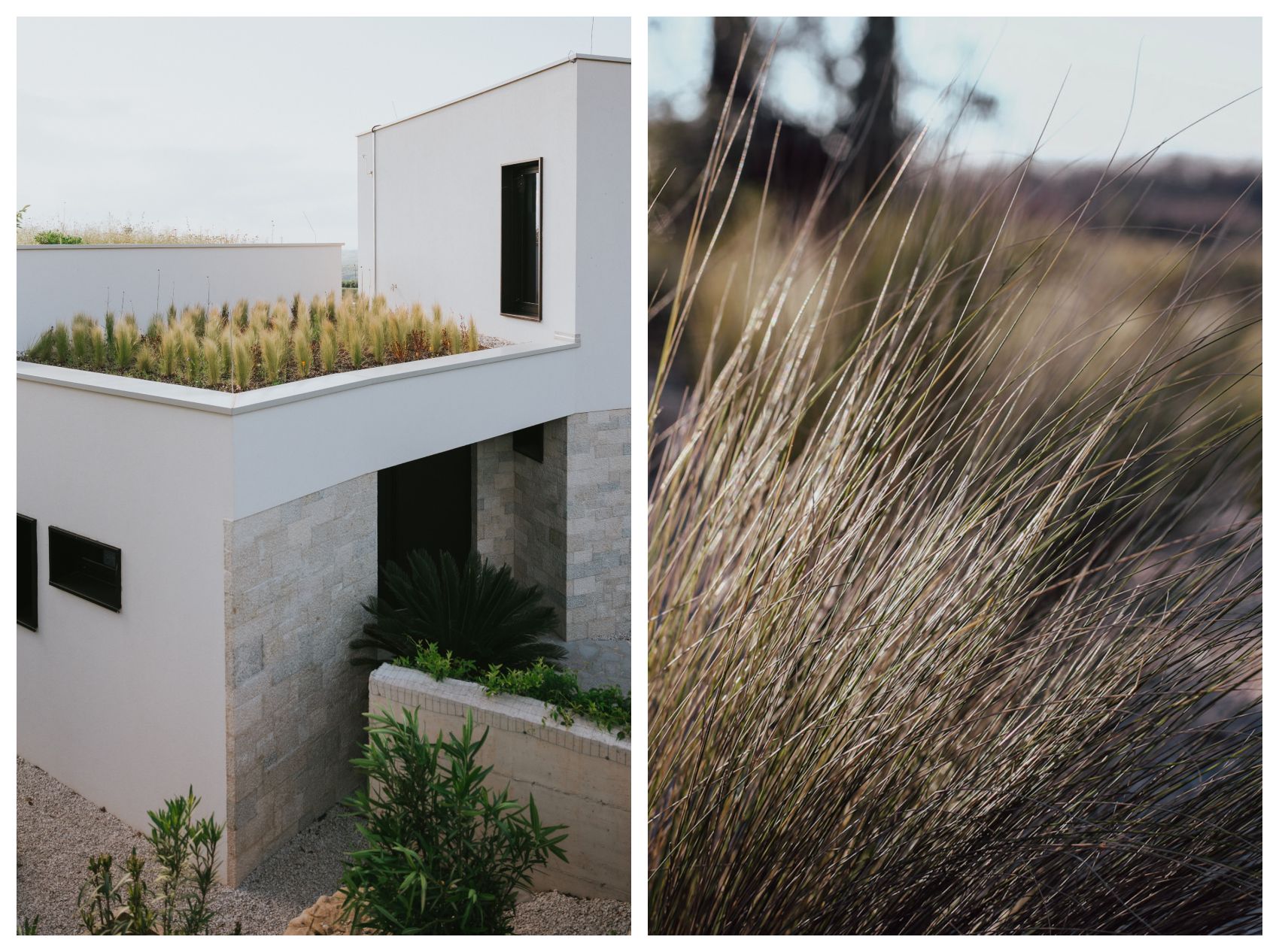
The driveway and pedestrian access are designed as an introduction to the space, clearly suggesting the character of the place and the personality of the owner. The pronounced difference in level of the plot is solved by a combination of concrete walls covered with climbing plants and drywall made of local stone, thus achieving a balance between technical solution and visual softness.
Tall greenery has been planted along the edges of the plot, providing privacy and protection from view, while the central area with a lawn and swimming pool opens up as an airy zone intended for relaxation and recreation.

Green roof & atrium as an integral part of the garden
A special element of the project is the extensive green roof, which is not intended as a formal fulfillment of regulations, but as an integral part of the landscape concept. Performed with a more generous layer of substrate, it enabled the planting of more informal plant groups and gave additional ecological and aesthetic value to the space. The green roof is visible from the road, the approach to the building and from certain rooms of the villa, which makes it an active part of the everyday experience of the space.
Inside the building is an atrium, conceived as an intimate green scene experienced exclusively from the interior. The lush and dense greenery creates a strong contrast to the architectural austerity and brings a sense of privacy and calm. Atriums often pose a challenge due to the limited conditions for plant growth, but such spaces are precisely the opportunity for carefully thought-out solutions that connect architecture and landscape.

Maintenance and long-term value
The Villa Alma garden has been regularly maintained since its inception, with a flexible approach that allows for a certain spontaneity and natural development of the plant material. An automated irrigation system, fed by rainwater from a buried tank, allows for stable growth and reduces the maintenance burden. The landscape is designed as a system that matures over time, not as a static image. Here you can learn more about the key plants of this Mediterranean garden.
The project is presented in more detail in our Villa Alma portfolio, as well as in Vert magazine, where it was published as part of an editorial feature dedicated to landscape architecture.

Leave a Reply