

Key plants of the Mediterranean garden in Istria – the example of Villa Alma
Mediterranean gardens are often perceived as simple and "natural", but behind their apparent ease lies a series of thoughtful decisions. The choice of plant material must respond to the climate, soil, microclimate conditions, but also to the architecture of the space and the expectations of the user. Using the example of the garden of Villa Alma in Istria, we present an overview of the key plants that form the basis of its structure, atmosphere and long-term sustainability.
The garden is part of the landscape project of Villa Alma, which you can view in our portfolio.
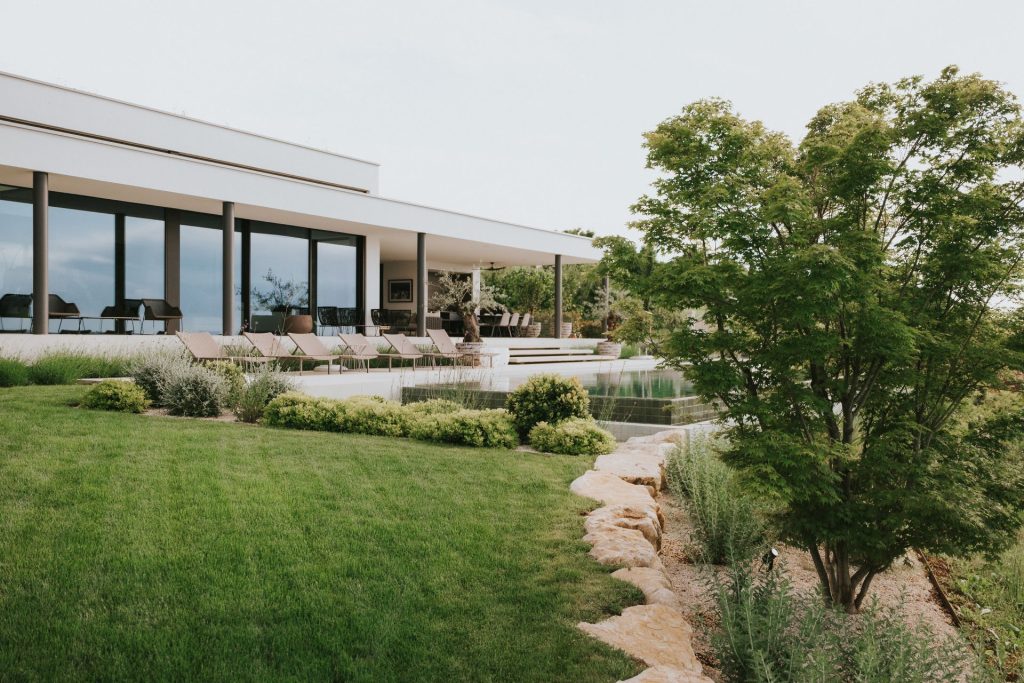
Garden context and climatic conditions
The Villa Alma garden is located in a wine-growing area near Vižinada, at an altitude of between 200 and 300 meters above sea level. The sub-Mediterranean climate with warm days and cooler nights, the mineral-rich red soil and the open landscape required the selection of plants that are drought-tolerant, wind-resistant and high summer temperatures, but at the same time offer seasonal dynamics and spatial depth. The plants were chosen with the aim of creating a garden that matures over time without losing quality.
It is also important to mention that this is a large garden, covering an area of 3,000 m2, and that more than 1,300 seedlings of various plants have been planted. Among the forty different plant species, five stand out in particular.
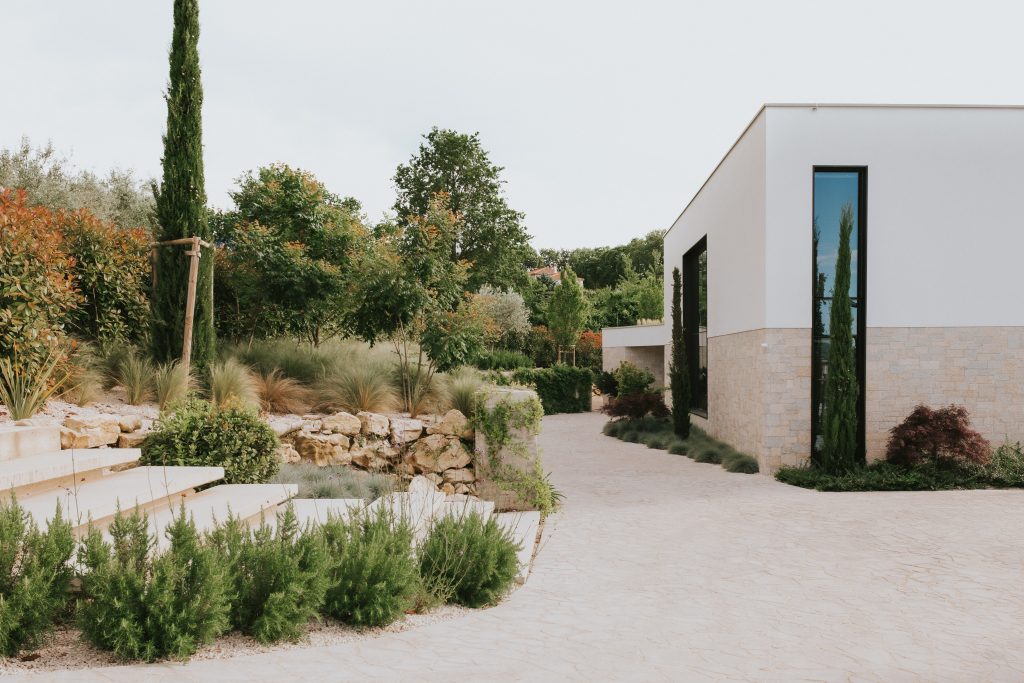
Key plants of Villa Alma's garden
Columnar hornbeam (Carpinus betulus 'Fastigiata')
The columnar hornbeam brings clear, bright verticals into the space, which contrast with the darker and more massive elements of the garden. Its upright form allows for defining the space without creating heavy visual barriers.
In addition to its aesthetic value, the hornbeam is low-maintenance, tolerates pruning well and grows quickly, retaining its foliage for much of the year. It also provides a habitat for small animals and contributes to the ecological value of the garden.
Photinia (Photinia x fraseri)
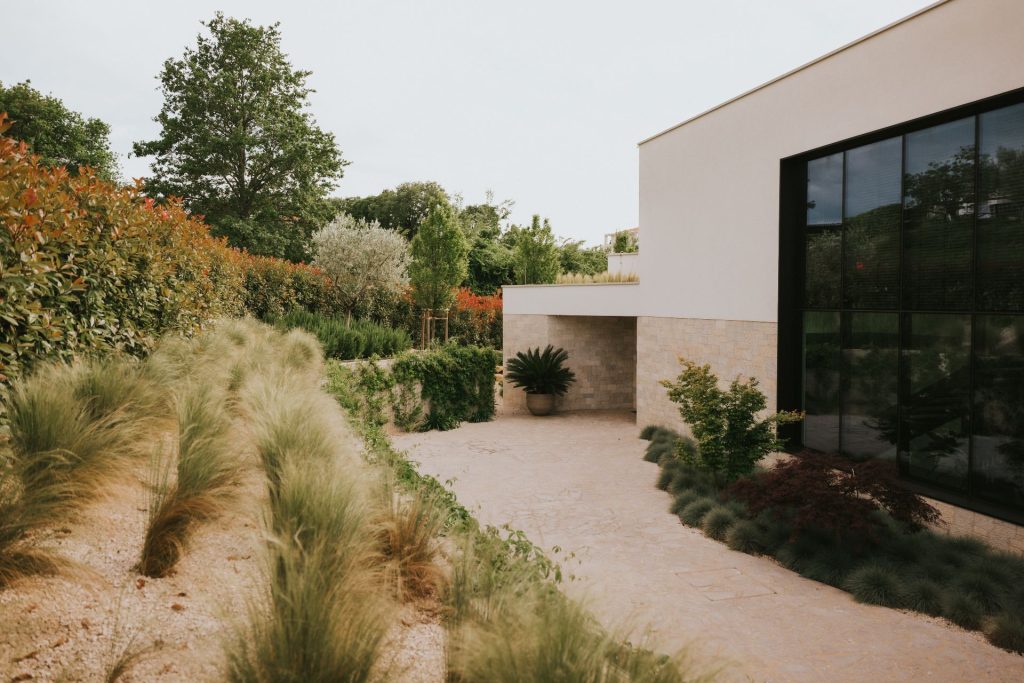
Photinias are used as hedges that define the edges of the plot and create a background for other plant layers. Their shiny leaves and the characteristic red color of young shoots in spring bring a strong colorful accent to the garden.
In addition to their aesthetic function, photinias provide privacy and clarity of space, and when in bloom, they additionally enrich the garden with fragrance.
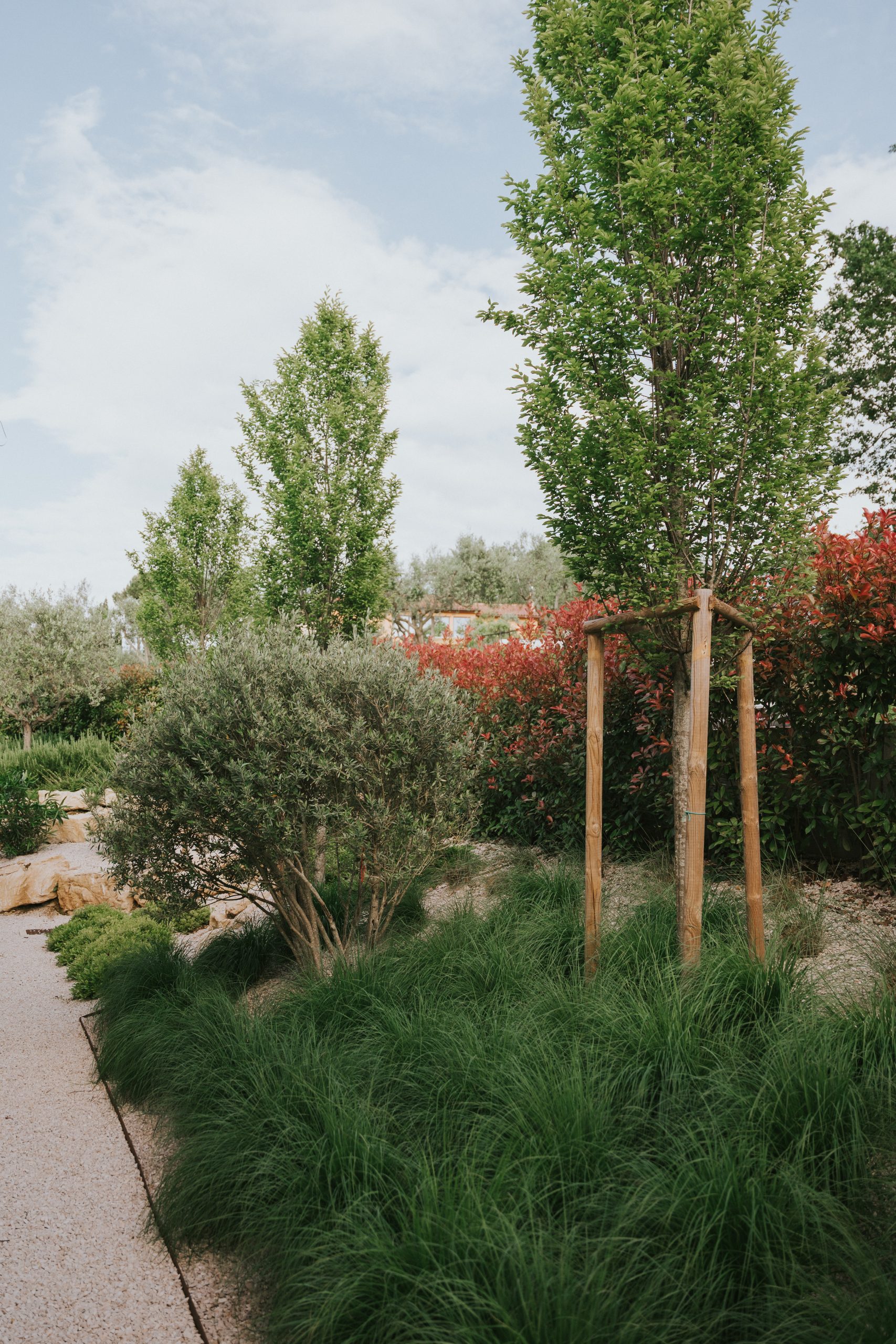
Maples (Acer sp.) - seasonal dynamics and movement
In the garden of Villa Alma, several types and forms of maples were used to achieve a variety of textures and colors throughout the year. Classic trees, multiple trees, half-trees and shrubby forms create layering and visual rhythm.
Maples stand out with their changing leaf colors throughout the season and airy crowns that react to a light breeze, bringing movement and subtle dynamics to the space.
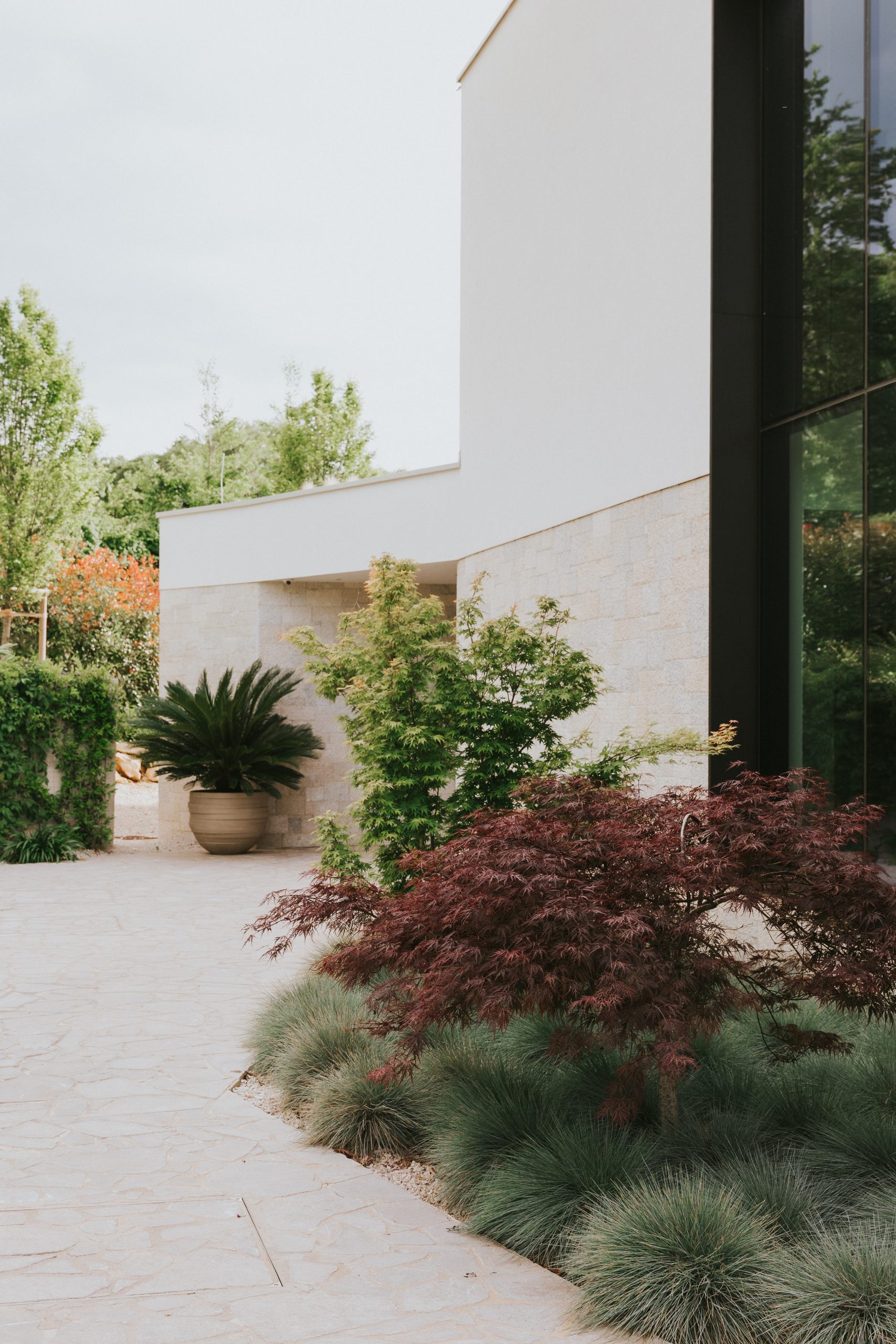
Stipula (Stipa tenuissima) – softness and continuity
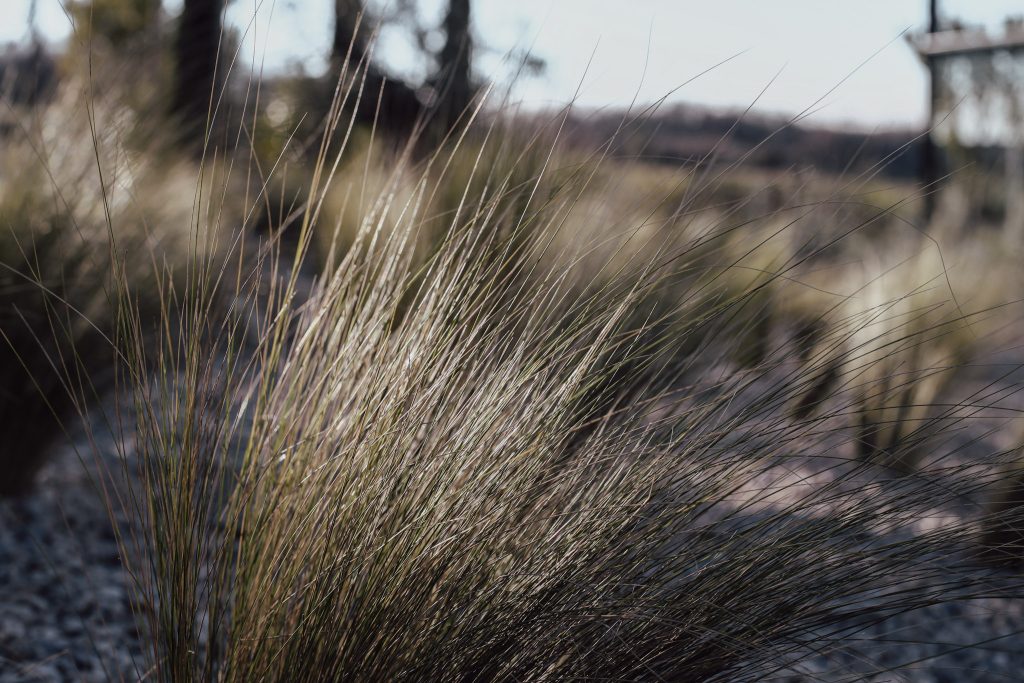
The ornamental grass Stipa tenuissima plays a key role in shaping the atmosphere of a garden. Its light, airy structure softens the strict concrete forms of architecture and allows for a natural transition between built and green space.
Stipa is extremely drought-resistant, does not require intensive maintenance and changes color from light green to gold throughout the year, providing lasting visual interest.
Olive tree (Olea europaea) – homage to the landscape
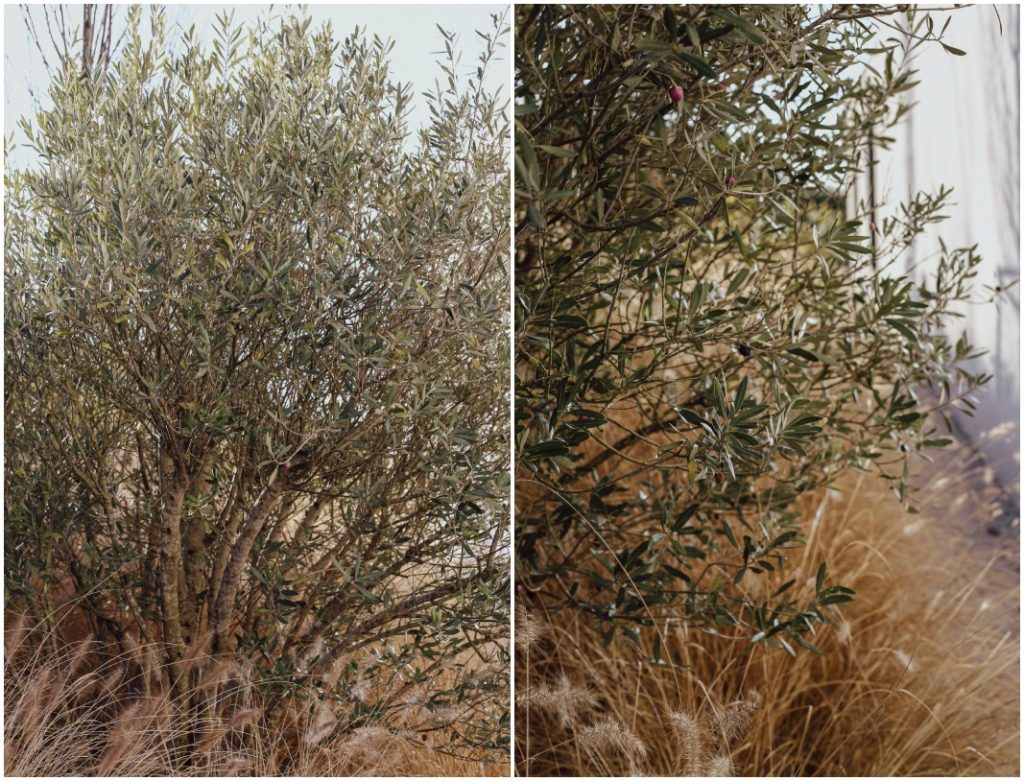
The olive tree is an indispensable element of the Mediterranean landscape and in this garden it has a symbolic and spatial role. It has been used in several growing forms - from classic Tuscan forms to multiple trees and older specimens with a strong trunk.
The discreet silvery color of the leaf allows the olive tree to act as a neutral backdrop, while its sculptural form creates strong visual points in the garden and interior of the villa.
Plants as part of a complete landscape
It is important to emphasize that none of these plants were chosen in isolation. Their value is expressed through their relationship to each other, the way they are planted, and the context of the space. The combination of trees, shrubs, and perennials creates a garden that is legible but not rigid, structured but not static. This approach allows the garden to gain character over time, rather than requiring constant corrections.
The plant selection in the Villa Alma garden is based on an understanding of the location, climate and long-term development of the space. Instead of short-term visual effect, the emphasis is placed on durability, adaptability and a subtle aesthetic that deepens over time.